Recipes & Videos

Baking Bread using Citric Acid and Soy Lecithin – using Dough Enhancers in Bread Baking

soy lecithin, citric acid, soy lecithin in bread dough, citric acid in bread dough, using dough enhancers to improve bread, using dough enhancers to improve bread texture, making bread using citric acid and soy lecithin, soft well textured bread dough, baking the best bread, how to bake perfect bread, making bread using dough enhancers,


Baking Bread using Citric Acid and Soy Lecithin - using Dough Enhancers in Bread Baking
Author: 
Recipe type: Bread
 
A few days back I featured some amazing giant burger buns using citric acid and soy lecithin as dough improvers. I was asked quite a few questions regarding this, so hopefully this video will cover all the answers.
Ingredients
Ingredients per Large Loaf
  • 625g Strong white bread flour
  • 45ml Milk powder
  • 20ml Caster sugar
  • 7.5ml Salt
  • 15ml Fast acting dried yeast
  • 45ml Oil
  • 400ml Water
If You Are Using Soy Lecithin and Citric Acid
  • 12g Soy lecithin
  • 1.5ml Citric acid
Instructions
  1. I am going to bake 2 very simple white loaves using identical ingredients and baking times. The one loaf will have the citric acid and lecithin added, and this will demonstrate the difference.
  2. I have added the flour, yeast, caster sugar, milk powder and salt to both mixing bowls. A brief stir combines these.
  3. For the one loaf, I have split the water in half, and measured the oil.
  4. For the standard loaf, the water is in a single jug, accompanied by the oil.
  5. For the first loaf, add the citric acid to one half of the water, and the lecithin to the other. Use your stick blender to sheer these in the water.
  6. Place a mixing bowl on your stand mixer with dough hook attached and add all of the ingredients for standard loaf.
  7. Close the mixer and allow this knead for 8 minutes. Remove the dough fro the bowl and put this aside covered with a damp towel.
  8. Return the bowl to the machine and add all of the ingredients for the second loaf, including the citric acid solution and the soy lecithin.
  9. Close the mixer and allow this to mix for 8 minutes.
  10. Remove this from the mixer.
  11. This is the only difference in process, where the plain dough has now had 8 minutes of extra rising time.
  12. Lightly flour your work surface and shape the 2 loaves, then place them in bread pans.
  13. To identify the enhanced loaf, I am going make a few slashes along the top of the loaf.
  14. Place the loaves in your oven at 40c or 104f for 45 minutes to prove.
  15. Remove from the oven and brush the tops of the loaves with beaten egg. You will notice how much further the enhanced dough has risen.
  16. Return these to the oven and adjust the temperature to 200c or 400f until well browned on top and they sound hollow when tapped.
  17. In the enhanced dough, the citric acid tenderizes the gluten while the soy lecithin gives this softer gluten more body and structure. This results in a much lighter, softer and airier texture of crumb.
  18. This can plainly seen when the enhanced loaf on the left, is compared to the loaf on the right.
  19. I hope this clears up any questions you may have had. I have included this recipe on the website for anyone wanting a simple white loaf.


How to Dry Apple Slices in your Oven – Make Dried Fruit at Home

how to dry fruit, how to dry apple slices, how to dry apple slices in your oven, how to make dried apple slices, homemade dried fruit, how to preserve apples, how to dry apples at home, homemade dried apple slices, preserving fruit at home, preserving apples at home,


How to Dry Apple Slices in your Oven - Make Dried Fruit at Home
Author: 
Recipe type: Fruit / Preserves
 
Desiccating fruit is a great way of preservation, and this works very well with apples. This process can be done very easily at home without any additives like sulphur dioxide.
Ingredients
  • 2-3 Large apples
  • 1 Liter water
  • 125ml White vinegar
Instructions
  1. Use your corer to remove the centers and seeds.
  2. Proceed by peeling the skins from apples. Some people like to leave the skin on, but I find it a little too chewy.
  3. Slice the apples into 3mm slices. You cut them a bit thicker if you prefer, however the drying time will increase accordingly.
  4. In a jug, combine the water with the white vinegar.
  5. Place the sliced apple in a mixing bowl and pour the vinegar solution over the apple.
  6. Mix this around gently, then leave it to soak for 30 minutes. The vinegar solution will prevent the apple from oxidizing and browning while it dries.
  7. After soaking, drain the apples and spread them out on a clean dish towel.
  8. Place another towel over this and pat the slices dry.
  9. Arrange the slices on stainless steel racks. These multi level cooling racks are particularly useful for this.
  10. Place the racks in your oven set at 90c or 200f for 2 hours until dry and leathery. If you would like them on crisper side, continue drying for a further hour.
  11. After the drying time, leave the apple in the oven to cool completely with door slightly open.
  12. And there it is,beautifully dried apple slices with no added preservatives.


How to Make Deep Fried Buttermilk Chicken – Crispy, Spicy Homemade Buttermilk Chicken

how to, buttermilk chicken, deep-fried buttermilk chicken, how to make deep-fried buttermilk chicken, home made deep-fried buttermilk chicken, crispy fried buttermilk chicken, best buttermilk chicken recipe, homemade buttermilk chicken recipe, fried buttermilk chicken recipe, fried buttermilk chicken recipe youtube, fried buttermilk chicken video recipe, how to make buttermilk chicken at home,


How to Make Deep Fried Buttermilk Chicken - Crispy, Spicy Homemade Buttermilk Chicken
Author: 
Recipe type: Chicken
 
Crispy, deep fried buttermilk chicken is outstanding. Succulent, juicy, spicy and super tasty, this will have your guests lining up for seconds.
Ingredients
  • 4 Large chicken thighs, deboned, skin on
For the Marinade
  • 250ml Cultured buttermilk
  • 15ml Dried onion flakes
  • 5ml Garlic granules
  • 5ml Salt (non-iodated)
  • 5ml Tabasco sauce
  • 5ml White pepper
For the Coating
  • 300g All purpose flour
  • 30ml Garlic powder
  • 30ml Dried onion flakes
  • 15ml Dried thyme
  • 10ml Dried sage
  • 10ml Hot smoked paprika
  • 20ml Salt (non-iodated)
  • 15ml White pepper
Instructions
  1. If your butcher is not kind enough to debone the chicken thighs for you, this is how to do it yourself.
  2. Using a sharp paring knife, cut away any excess skin and fat from the bind side of the thigh.
  3. Cut between the skin and the spine and dig in and free the oyster from the spine.
  4. Cut the skin back until the thigh joint is exposed.
  5. Use your shears to cut through the joint.
  6. Locate the thigh bone and cut through the flesh to expose it.
  7. Grab the knuckle of the thigh bone and cut the flesh away from the joint.
  8. Use the edge of the blade to scrape the flesh down the bone until you reach the other joint.
  9. Cut around this joint to free the bone and you're done.
  10. Continue with the remaining thighs, then cut each one into 4 pieces across the width.
  11. Lift the chicken pieces using an egg lifter and transfer them to a vacuum bag.
  12. To make the buttermilk marinade, stir the Tabasco into the buttermilk.
  13. Measure out the onion flakes, garlic granules, salt and white pepper and mix these into the buttermilk.
  14. Pour this into the bag with the chicken.
  15. To vacuum pack this, elevate the vacuum packer to avoid sucking liquid into the machine. If you don't have a vacuum packer, use a jiffy bag or simply submerge the chicken in the marinade in a bowl. If you go this way, the chicken will need to marinate for 12 hours, as opposed to 3 to 6 hours in the vacuum pack.
  16. For the coating, place the garlic powder, onion flakes, dried thyme, dried sage, hot smoked paprika, salt and white pepper in your spice grinder. Zap these to a fie powder.
  17. Combine this with the all purpose flour.
  18. Cut the vac pack chicken open and pour this into a bowl.
  19. Sprinkle a generous layer of the flour mixture over a large platter. This is where the coated chicken will set, and the flour prevents the chicken from sticking to the platter and damaging the coating.
  20. Working with one piece at a time, lift the chicken from the marinade and shake off the excess marinade.
  21. Dredge the chicken in the seasoned flour to get a good solid coating. Transfer the chicken to the platter to set.
  22. Allow the coating to set for 20 minutes.
  23. Continue until all of the chicken is coated.
  24. Half fill a wok or large frying pan with oil and heat this to 180c or 350f.
  25. Carefully drop 5 or 6 chicken pieces into the oil.
  26. Fry these for 4 to 5 minutes until crisp and golden. Use a slotted spoon to lift them from the oil and drain any excess oil on kitchen paper. Continue frying batches until all of the chicken is fried.
  27. And here it is... spicy, crisp and aromatic buttermilk fried chicken.


How to Make Potato Crisps – Best Recipe Homemade Potato Crisps – Super Crispy, Super Tasty!!!

potato crisps, potato crisps recipe, how to make potato crisps, low carb potato crisps, homemade potato crisps, home made potato crisps, best potato crisps recipe, how to make potato crisps youtube, how to make potato crisps video recipe, best potato crisps recipe youtube, potato, recipe, crisps, super crispy deep-fried potato crisps recipe, healthy potato crisps recipe,


How to Make Potato Crisps - Best Recipe Homemade Potato Crisps - Super Crispy, Super Tasty!!!
Author: 
Recipe type: Potatoes
 
Potato crisps are a tote favorite across the globe. Today we're going to look at how to make low carb potato crisps that are super crispy and super tasty.
Ingredients
For the Flavor Powder
  • 30ml Dried mixed herbs (Italian or Herbs Provence)
  • 2.5ml Garlic powder
  • 2.5ml White pepper
  • 5ml Salt
For the Crisps
  • 2-4 Large potatoes
  • 3 Liters water
  • 60ml White vinegar
  • 30ml Salt
Instructions
  1. Place the mixed herbs, garlic powder, fine ground white pepper and salt in your spice grinder. The fine powders help the grinder grind the herbs to powder by adding extra resistance in the chamber.
  2. Transfer the fine blend to a sprinkle bottle.
  3. To cut the potatoes in thin slices, you can use a regular potato peeler, however these slices are too thin and will over-brown before crisping.
  4. Better than the regular is the ceramic peeler which will give you slightly thicker slices. The problem with this is that if you go even slightly skew, the wafers will be horribly uneven, resulting in burnt edges.
  5. The best way to achieve perfect slices is with a very sharp thin blade knife. Cut the slices to 1mm thickness.
  6. Transfer the sliced potato to a mixing bowl and pour in 3 liters of water.
  7. Add the salt and white vinegar and mix this around yo separate all of the potato wafers.
  8. You will immediately see the vinegar liberating the starch from the potato.
  9. Allow this to soak for 30 minutes.
  10. Drain and rinse the potatoes and lay them out flat on a clean dish towel.
  11. Place another towel over these and pat them dry.
  12. Half fill a large pan or wok with oil and heat this to 180c or 350f.
  13. Carefully drop the wafers in to the oil. As the crisps fry you will notice that the violent frying as the water content is driven from the potato becomes more and more gentle.
  14. Within a couple of minutes the crisps will be causing no frying reaction at all, and they will be crisp and golden.
  15. Remove the crisps from the oil and drain on kitchen paper.
  16. Continue with any remaining potato wafers.
  17. As the crisps cool they will crisp up even more.
  18. Transfer them to a large roasting tin. Sprinkle the flavoring powder over the crisps and toss them around gently to coat.
  19. Sprinkle again to cover any blind spots, toss again, then serve with a dipping sauce of your choice.
  20. And the we have it.... a mountain of awesomely crisp, golden, low carb potato crisps ready to be snacked.


Distilling Alcohol – Making Cuts and Fractions – Learning to Blend Better Alcohol

making cuts when distilling alcohol, how to make cuts when distilling alcohol, cuts and fractions when distilling alcohol, distilling alcohol in a pot still, how to distill alcohol in a pot still, how to make cuts when distilling in a pot still, how to distill alcohol at home, how to fraction and blend alcohol, how to fraction and blend distilled alcohol, blending alcohol using fractions,

In our previous distilling episode we built a basic pot still. Today we’re going to distill a batch of fermented wash and learn how to make the cuts or separations between the foreshots, heads, heats and tails during the run.
If you have followed this series, you will remember that sugar wash does not produce methanol, and also only insignificant quantities of acetones and aldehydes. For this reason, if you’re distilling sugar wash, the only thing you really need to remove is the foreshot, and even this is not absolutely necessary,  but will improve the flavor of your product.
Although I am using sugar wash, I am going to demonstrate the cuts as if I were using a fermented mash. By mash, I mean and fermented wash that contains bio-matter, whether this be raisins, grain, spices or even unrefined sugar. As soon as a wash contains biomass, it becomes a mash, and we have larger quantities of acetone, methanol and aldehyde. These need to be removed during the distillation to ensure a safe and pleasant tasting product.
Starting with the foreshots, or acetone. The acetone starts emerging from the still when the head temperature reaches 50c or 122f. This is when you turn on the cooling pump.
The calculation is simple. For every 5 liters of mash, you will collect 30ml of foreshot. If you’re distilling a 25 liter batch, you will collect 150ml of foreshot. This acetone cannot be used for anything and is discarded.
From here onwards, the distillate is collected in 100ml fractions. These are measured using your alcohol meter as you go.
The heads will contain alcohol levels of over 80%, with a percentage of this comprising methanol, or wood alcohol.
When the alcohol reading drops below 80%, your collection of heads is complete. Keep the 100ml heads samples separate and put them aside.
Continue distilling and collecting 100ml samples until the alcohol reading drops below 65%. This lot of samples is the good stuff, and is called the hearts. These can be combined and put aside.
The next lot of samples is called the tails. You will continue to collect 100ml samples until the acohol level drops below 20%.
By this stage the head temperature of the still will be approaching 95c or 203f. Turn the off the heat but leave the cooling system running until the still cools down.
Keep the 100ml samples from tails separate and put these aside.
Cover all of the distillate with lint free towels and allow this stand ovenrnight. This allows any unpleasant tasting volatiles to evaporate.
The following day, sniff and taste each sample of heads, and  blend the decent samples with hearts in quantities that you see fit.
Repeat this with tails. Any samples that don’t get blended into the finished product can be saved and added to your next distilling run.
It is important to note that the head temperature of the still must not exceed 95c or 203f. This is how we cut the aldehyde out of the mix. Aldehydes smell and taste terrible and will ruin your blend.
As far as the blending process is concerned, this is very much a matter of personal taste… there is no right or wrong blend.
After a few batches, your nose and taste will become more adept and your blends will become more and more refined.

Most impotantly, have fun, and feel to send any questions through to me via our Youtube Channel.


McDonald’s Chicken McNuggets Recipe – How to Make McDonald’s McNuggets at Home!!!

chicken mcnuggets, mcdonalds chicken mcnuggets, how to make, how to make mcdonals chicken mcnuggets, homemade mcdonalds chicken mcnuggets recipe, chicken mcnuggets recipe video, chicken mcnuggets recipe youtube, make mcdonalds chicken mcnuggets at home, quick and easy chicken mcnuggets recipe, mcdonalds chicken nuggets recipe,


McDonald's Chicken McNuggets Recipe - How to Make McDonald's McNuggets at Home!!!
Author: 
Recipe type: Chicken / Fast Foods
Cuisine: American
 
A couple of weeks ago one of our viewers requested that I decode the McDonalds Chicken McNuggets recipe. I took up the challenge, and here it is.
Ingredients
For the Coating Batter (enough for 8-12 chicken breasts)
  • 90g All purpose flour
  • 15ml Salt
  • 15ml Bicarbonate of soda
  • 125g Yellow maize meal
  • 90g Corn starch
  • 20ml White pepper
  • 10ml Onion powder
  • 5ml Garlic powder
  • 5ml Ground cumin
  • 5ml Ground coriander seed
  • 5ml Cayenne pepper
  • 2.5ml Dried oregano
  • 2.5ml Dried basil
  • 2.5ml Dried rosemary
  • 2.5ml Dried Thyme
  • 450ml Water
Instructions
  1. Unlike KFC, where the spicy flavor is cured into the chicken, with McNuggets, the flavor is all in the coating, so that's where we're starting.
  2. Measure out the yellow maize meal, the cornstarch and the all purpose flour.
  3. For the seasoning, combine the white pepper, onion powder, garlic powder, ground cumin, ground coriander seed, cayenne pepper, dried oregano, dried basil, dried rosemary and dried thyme. Grind these to powder in you spice grinder.
  4. Place all of the aforementioned into a large mixing bowl and mix briefly to combine.
  5. Pour in the water and whisk until smooth.
  6. Put this aside for 30 minutes to autolyse.
  7. After 30 minutes, even the smallest particles in the liquid will be saturated, and as a result the batter will have thickened considerably, and will coat the back of a spoon.
  8. The real McNuggets uses coarsely ground chicken reconstituted with the aid of emulsifiers and high pressure extruders. Since this does not affect the taste, we're not going to run out and buy bags of phosphates and fancy industrial extruders.
  9. Trim away the fillet from the chicken breasts.
  10. Square off the ends of the breasts and slice the remaining breasts into slices 5mm or a 5th of an inch thick.
  11. Place any trimmings in your refrigerator for other recipes.
  12. Half fill a wok or pan with oil and heat this to 170c or 340f.
  13. Once again, we don't have fancy conveyer belt coating machines, so to coat the chicken bits, pick a piece up with a skewer, dip it in the batter and drop it into the oil.
  14. The chicken cooks within 60 seconds, so you will only fry about 6 or 7 pieces at a time.
  15. Use a slotted spoon to remove them from the oil, and drain any excess oil on kitchen paper.
  16. And there it is.... a mountain of McNuggets just waiting to be enjoyed.


Barbecue Glazed Pork Bracelet Kebabs – Delicious Glazed Pork Kebabs with a Difference!!!

barbecue glazed pork bangle kebabs, glazed circular kebabs, glazed bracelet kebabs, barbecue pork kebabs, pork bracelet kebabs on your barbecue, chinese stye pork bracelet kebabs on your barbecue, special pork bangle kebabs on you barbecue, how to make circular kebabs, threaded bracelet kebabs, sweet glazed pork kebabs, round pork kebabs on the barbecue, best pork kebabs recipe, best pork kebabs video recipe, best pork kebabs recipe youtube, how to make round pork kebabs youtube,


Barbecue Glazed Pork Bracelet Kebabs - Delicious Glazed Pork Kebabs with a Difference!!!
Author: 
Recipe type: Pork
Cuisine: Chinese
Prep time: 
Cook time: 
Total time: 
Serves: 6
 
Today we're making something really interesting, and you saw it first on Whats4Chow. These circular kebabs aren't just delicious, they give you a novel and attractive way to present an otherwise run-of-the-mill dish.
Ingredients
  • 700g Pork neck steak
  • 30ml Hoisin sauce
  • 60ml Soy sauce
  • 15ml Rice wine or dry sherry
  • 5ml Salt
  • 60ml Sugar
  • Spring onion greens
  • 1 x Upholstery needle for threading
Instructions
  1. slice the pork neck steaks into 20mm or ¾ inch cubes, then transfer these to mixing bowl.
  2. In a jug, combine the hoisin sauce, light soy sauce, rice wine, salt and sugar. Stir this until all of the salt and sugar has dissolved.
  3. Pour the marinade over the cubed pork and massage this into the meat thoroughly. Put this aside.
  4. Cut the greens from 5 or 6 large spring onions.
  5. Place the greens in a large roasting pan and pour in enough boiling kettle water to cover.
  6. Allow these to stand for 15 minutes until totally wilted.
  7. After this time, lift the greens and tear them in half lengthways.
  8. To thread the kebabs, you will need a large upholstery needle like this one, with and over-sized eye. You can find these at most hardware stores or leatherwork suppliers.
  9. Thread a stip of spring onion green through the eye of the needle.
  10. Press the needle through a cube of pork. Grab the point of the needle with a dishtowel and pull the spring onion through the pork. Pull it all the way through leaving about 2 inches of green loose.
  11. Continue until the entire spring onion is threaded with pork with exception of 2 inches on each end.
  12. Pull the 2 ends together and tie them using a double knot.
  13. Transfer the pork bagles to a large platter ans spoon any remaining marinade over the bangles.
  14. Heat a skillet on your barbecue until smoking hot.
  15. Brush the skillet with oil, and place the pork bangles on the skillet.
  16. Brush the bangles with the runoff marinade and close the lid of your barbecue. Allow these to grill for 4 minutes.
  17. Open the grill and carefully flip the bangles over. Brush them with any leftover marinade and close the lid.
  18. Let these grill for a further 4 minutes.
  19. Remove the pork bangle kebabs from the grill and serve immediately with the accompaniments of your choice.
  20. And the we have it, unique, tender, juicy glazed pork bangle kebabs.


How to Make Potato Bun Burgers – Delicious Crispy Deep Fried Potato Bun Burgers – Gluten Free Friend

potatoe burger buns, how to make potato buns for burgers, how to use potatoes as buns for burgers, deep fried potato buns for burgers, how to make potato burger buns, deep fried potato buns, double cheese burger on potato buns, home made potato buns, gluten free burger buns, gluten free potato burger buns, how to make gluten free burgers, homemade gluten free burger buns,


How to Make Potato Bun Burgers - Delicious Crispy Deep Fried Potato Bun Burgers - Gluten Free Friend
Author: 
Recipe type: Burgers
Prep time: 
Cook time: 
Total time: 
Serves: 2
 
Potato bun burgers are real good fun, and a great way to combine your fries with your burger. They also make it possible for people on wheat restricted diets to enjoy an amazing burger.
Ingredients
For 2 Burgers
  • 2 Large potatoes
  • 400g Ground beef
  • 15ml Salt (non-iodated)
  • 15ml Dry chilli flakes
  • 15ml Dried garlic granules
  • 12 slices melting cheese of your choice
  • Frilly lettuce
  • 3 Cocktail tomatoes
  • Ketchup or sauce of your choice
Instructions
  1. Place the large potatoes in a pot and cover them with boiling kettle water. Heat the pot over high heat and boil the potatoes until they are tender. This timing will vary depending on the variety of potatoes you're using.
  2. In the meantime place the ground beef in a mixing bowl and add the salt, chilli flakes and dried garlic granules.
  3. Get in there with your hands and massage this all together.
  4. Slice the cheese into thin slices, slice the cherry tomatoes and take enough frilly lettuce.
  5. Use your burger press to form 4 x 100g patties and transfer these to your refrigerator.
  6. Remove the boiled potatoes from the pot and cool them under cold running water.
  7. Use a sharp knife to slice a bit off of each flat side of the potatoes, then cut the potatoes through the center length-ways.
  8. Half fill a large pan with oil and heat this to 180c or 350f.
  9. Carefully lower the potatoes into the oil and fry them until crisp and golden on both sides.
  10. Remove the potatoes and drain any excess oil on kitchen paper.
  11. Heat another pan over medium high heat and add 15g of butter.
  12. Grill the burger patties for 2 to 3 minutes on the first side.
  13. Flip the patties over and top the patties with the cheese. Continue grilling until the cheese starts melting. Stack the patties in pairs.
  14. Place one of the fried potato pieces on a serving platter and top this with lettuce.
  15. Place a burger patty stack on top of this.
  16. Top the stack with sliced tomato and a drizzle of ketchup.
  17. Finish this off with the top potato and you're ready to feast.


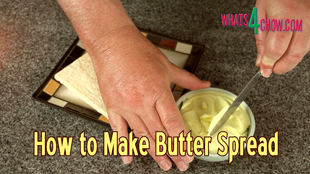
How to Make Butter Spread – Homemade Spreadable Butter – How to Make Tub Butter!

how to make spreadable butter, how to make butter spread, how to make tub butter, homemade spreadable butter, homemade butter spread, homemade tub butter, how to make butter spread at home, butter spread recipe, spreadable butter recipe, tub butter recipe, how to make butter spread youtube, how to make butter spread video recipe,


How to Make Butter Spread - Homemade Spreadable Butter - How to Make Tub Butter!
Author: 
Recipe type: Butter & Spreads
Prep time: 
Total time: 
 
Just the other day we made the original recipe margarine. In my book, butter will always be king. However, butter does have some drawbacks. In winter, even when left on the counter, it is un-spreadable, and in summer it has to be in the refrigerator, leading to the same predicament.
Ingredients
  • 125g Softened butter (Not melted)
  • 80ml Oil (sunflower, canola or olive oil)
Instructions
  1. Weigh out 125g of softened, but not melted butter, and measure out 80ml of good quality cooking oil. You can use sunflower, olive or canola, however, not coconut oil.
  2. Pour the oil into the butter and start mixing. If you make much larger quantities than this, it is much easier to mix this in your food processor.
  3. At first the mixture will turn lumpy, then as you continue the lumps will gradually decrease in size until you have a perfectly smooth blend of butter and oil.
  4. Use a silicon spatula to transfer the butter spread to a bowl or tub and refrigerate until required.
  5. And here it is after a few hours in the refrigerator. The spread is firm, but can be quite easily spread.
  6. If you want your butter spread even softer, simply add a little more oil while mixing.


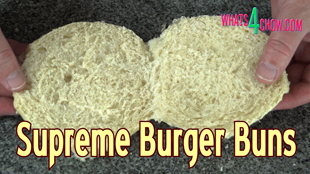
Supreme Burger Buns – Best Burger Buns Recipe Ever! How to Make Burger Buns at Home!!

burger bun, burger bun recipe, sesame bun, sesame bun recipe, how to make burger buns, learn to make burger buns, best burger bun recipembest burger roll recipe, gourmet burger bun recipe, perfect burger bun recipe, easy burger bun recipe, how to make the best burger buns, Hamburger (Dish), best burger buns ever, homemade burger buns, soft light burger buns, burger buns light and soft, how to make burger buns at home, homemade sesame buns,


Supreme Burger Buns - Best Burger Buns Recipe Ever! How to Make Burger Buns at Home!!
Author: 
Recipe type: Bread / Dough
Serves: 12
 
Some time back I published a recipe for the best burger buns ever. You can check it out by clicking the onscreen link. Today we're going scientific and making the best best burger buns.
Ingredients
  • 950g Strong white bread flour
  • 60g Butter, grated
  • 15ml Sugar
  • 10ml Salt
  • 10g Instant yeast
  • 30ml Milk powder
  • 600ml Warm water
  • 20g Soy lecithin
  • 2.5ml Citric acid
  • 1 Egg, beaten
Instructions
  1. Place the flour and grated butter in your stand mixer bowl.
  2. Measure out the sugar, salt, instant yeast and milk powder.
  3. Measure out the warm water in two equal portions.
  4. Add the citric acid to one portion.
  5. Add the soy lecithin to the other portion.
  6. Use your stick blender to sheer the additives into the liquid.
  7. Place the mixer bowl on your mixer with the beater attached.
  8. Start the mixer and let it run for 2 minutes until the grated butter has been rubbed into the flour.
  9. Open the mixer and swap out out the mixer paddle for the dough hook.
  10. Pour in all of the other ingredients. (except the egg)
  11. Start the mixer and knead the dough for 8 minutes on medium low speed.
  12. Remove the bowl from the machine and cover with cling-wrap. Place the bowl in a warm place and allow the dough to rise for 60 minutes.
  13. During this time it will more than double in size.
  14. Turn the dough out onto a lightly floured work surface, flour the top of the dough and briefly knead it until it is knocked down.
  15. Weigh the dough and divide it into 12 equal portions.
  16. Working with one portion at a time, stretch the edges of the dough downward and fold it underneath the ball.
  17. Place the ball of dough on the work surface and use your fingers to complete the form by digging underneath the bundle and rotating the dough simultaneously.
  18. Transfer all of the formed buns to a baking sheet, leaving at least an inch and a half of space between the buns.
  19. Half fill a baking pan with boiling kettle water and place this on the bottom shelf of your oven.
  20. Place the buns in the center of your oven and set the temperature to 40c.
  21. Let the buns prove at this temperature for 60 minutes until more than doubled in size.
  22. After this time remove the buns from the oven and brush them with the egg. Brush carefully so as not to deflate the buns.
  23. Return the buns to the oven and reset the temperature to 200c or 390f until the buns are lightly golden on top.
  24. If the buns sound hollow when tapped they are ready to remove from the oven.
  25. Transfer the buns to a rack to cool.
  26. And there we have it, incredibly soft, springy and tasty burger buns ready for eating.


Bacon, Feta & Peppadew Kebabs – Absolute Kebab Perfection, Made in Heaven!

bacon, feta, peppadew, kebabs, bacon feta and peppadew kebabs, how to make bacon feta and peppadew kebabs, bacon feta and peppadew kebabs recipe, bacon feta and peppadew kebabs video recipe, bacon feta and peppadew kebabs youtube, best kebabs recipe, best kebabs recipe youtube, bacon feta and piquant peppers kebabs,


Bacon, Feta & Peppadew Kebabs - Absolute Kebab Perfection, Made in Heaven!
Author: 
Recipe type: Grill / Barbecue
Prep time: 
Cook time: 
Total time: 
Serves: 4
 
These bacon, peppadew and feta kebabs are out of this world. Slightly sweet, slightly hot and tangy, these kebabs will have your guests lining up for more.
Ingredients
For 4 Kebabs
  • 8 Rashers streaky bacon
  • 16 Peppadews (pickled piquant peppers)
  • 50g Feta cheese
  • 4 x 150mm / 6 inch skewers
  • 15ml Butter
Instructions
  1. Cut the bacon rashers through the center.
  2. Cut the feta cheese into cubes of about 1cm or just less than a half inch.
  3. Stuff a cube of feta into each peppadew until each one is filled to the brim.
  4. Place s strip of bacon across the opening of a peppadew and wrap it around the peppadew to enclose the feta cheese. Continue until all of the bundles are formed.
  5. To make up the kebabs, drill the skewers through the peppadew bundles using a twisting motion. If you try to push them through, you will end up squeezing the cheese out.
  6. Once you have four bundles on the skewer, straighten the bundles out to align the edges.
  7. Heat a large pan over medium high heat and add a tablespoon of butter.
  8. Add the kebabs to the pan with the bacon in contact with the pan.
  9. Fry this for 3 minutes, then turn the kebabs over to the other bacon side. Fry this for a further 3 minutes.
  10. Turn the kebabs onto one edge and fry this for 60 seconds.
  11. Turn them to the other edge and fry for another 60 seconds.
  12. Remove the kebabs from the oven and serve immediately with the accompaniments of your choice.
  13. These little gems can also be grilled quite successfully on your barbecue using a skillet or riffle pan.


How to Make Portuguese Rolls. Crispy, Chewy Portuguese Bread Rolls Recipe!

portuguese rolls, portuguese bread rolls, how to make portuguese bread rolls, easy portuguese bread rolls, homemade portuguese bread rolls, home baked portuguese bread rolls, portuguese bread rolls recipe, portuguese bread rolls youtube, portuguese bread rolls video recipe, best portuguese bread rolls recipe,


How to Make Portuguese Rolls. Crispy, Chewy Portuguese Bread Rolls Recipe!
Author: 
Recipe type: Bread
Cuisine: Portuguese
 
Portuguese rolls have their very own trademark crispy crust with a beautifully soft and springy crumb. They are really easy to make, however, due to the long and vigorous kneading required, I do suggest using a stand mixer.
Ingredients
  • 500g All-purpose flour
  • 7ml Salt
  • 10g Instant yeast
  • 315ml Warm water
Instructions
  1. Place the all-purpose flour, salt and instant yeast into your stand mixer bowl.
  2. Mix these together briefly, then transfer the bowl to your mixer.
  3. Attach the dough hook and pour in the water.
  4. Close the mixer and mix the dough on the slowest setting for 2 minutes.
  5. Increase the speed to medium-high and continue to knead for a further 8 minutes.
  6. At the end of the kneading, you will have a lovely soft, smooth dough that is only slightly sticky.
  7. Remove the bowl from the machine and cover with cling-wrap. Allow the dough to relax for 5 minutes.
  8. Remove the dough from the bowl, weigh it and divide it into 12 pieces for small rolls, 8 pieces for medium, or 6 pieces for large.
  9. Working with one piece at a time, stretch the edges of the dough to the bottom to form a rough ball.
  10. Place the dough on the work surface. Cup your hand over the dough and using a circular motion, form the dough into a smooth ball.
  11. Cover the dough balls with a damp tea towel and allow them to relax for 10 minutes.
  12. After this time, take one of the balls and slap it flat.
  13. Pull your hand backwards to roll the disc up into a sausage.
  14. Holding your hands at angles to the outer edge of the dough, continue rolling the sausage to form the pointed ends and fat center section.
  15. Scatter a generous layer of flour over a baking sheet and transfer the rolls to the sheet with the seam of the rolls facing upward.
  16. Allow the rolls to prove at 40c for 50 minutes and a humidity of 85%. I do this in a slightly warmed oven, sprayed with a misting of water.
  17. After 40 minutes of proving, remove the rolls from the oven, and set the oven to 200c to preheat.
  18. Carefully flip the rolls over and cover them with a tea towel until the proving time is over.
  19. When the oven has reached 200c, spray a misting of water into the oven and bake the rolls for 20 minutes until crisp and lightly golden.
  20. Remove the rolls from the oven and transfer them to a rack to cool for at least 15 minutes before serving.
  21. And here it is.... a crispy crust with an amazing soft, springy crumb.


Scroll to top

Kitchen Conversions

Convert:
Masses
to:
Volumes
to:
Temperatures
to:
Lengths
to: